

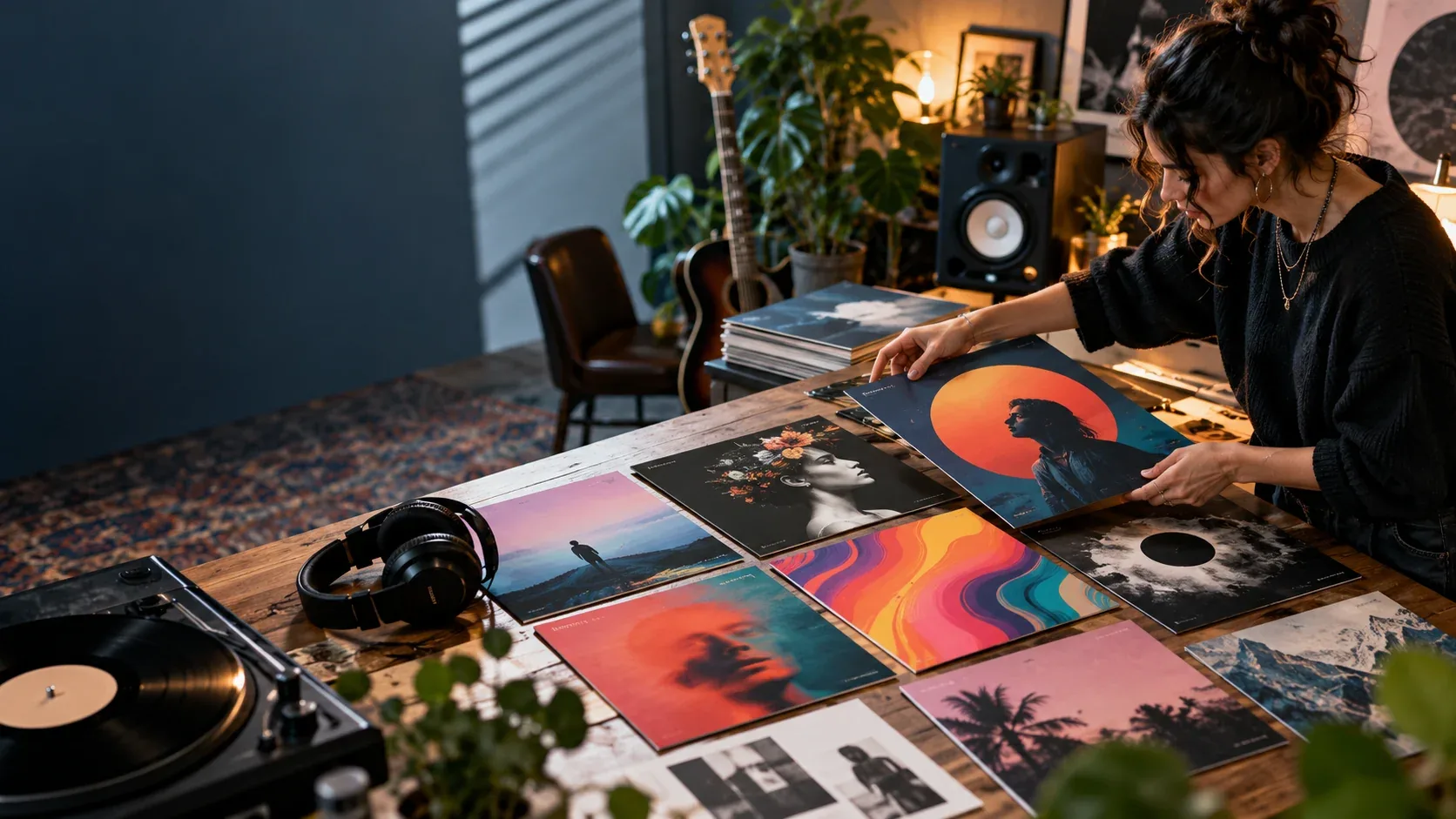
An album cover is both artwork and commercial packaging. Stock photography can be a fast way to build a strong visual identity, but musicians and designers should confirm that the image license fits the release before distributing the artwork.
Confirm commercial usage
An album released on streaming platforms, sold as a download, or printed on physical media is a commercial project. Check that the stock-image license allows the intended use.
Check whether modification is allowed

Album artwork often involves color grading, typography, textures, compositing, cropping, and other changes. Confirm that the license permits the transformations you plan to make.
Be careful with recognizable people
If the cover features an identifiable person, review model-release information and the license terms. The final artwork can create an association between the person and the artist, album title, or lyrical themes.
Avoid accidental brand conflicts

Visible trademarks, logos, branded clothing, or recognizable products can distract from the artist identity and introduce rights questions. Clean source imagery is usually easier to work with.
Choose an image that survives a square crop
Album art is commonly displayed as a square and often appears as a very small thumbnail. Strong silhouettes, clear focal points, and simple compositions tend to remain recognizable at small sizes.
Leave room for typography
If the artist name and title will appear on the cover, look for negative space or a region with consistent contrast. Forcing type over a busy photo often weakens both the image and the text.
Start with a high-quality source
Streaming artwork, promotional graphics, posters, and physical releases may reuse the same visual. License a source file with enough resolution to support those derivative formats. See our resolution guide.
Keep proof of the license
Save the asset ID, source URL, transaction record, license terms, and download date. That record is useful when artwork is reused years later for reissues, merchandise, videos, or promotional campaigns.
For the licensing basics, read our royalty-free image guide. Explore IHaveStock when you need visual material for covers, campaigns, and creative projects.